10 Mistakes First-Time Bareboat Charterers Make When Provisioning Their Yacht
When people picture a bareboat charter vacation, they imagine turquoise water, beach bars, snorkeling stops, and sunset dinners on deck. What they usually don’t picture is standing in a tiny yacht galley wondering where to store six cases of water, how to keep lettuce fresh, or why nobody remembered to buy coffee filters.
Provisioning and meal planning are often the most underestimated parts of a sailing vacation.
After more than a decade of bareboat chartering throughout the Virgin Islands, the Bahamas, Puerto Rico, Canada, and the South of France, I’ve seen firsthand how small planning mistakes can create unnecessary stress once you leave the marina.
The good news? Most provisioning problems are completely avoidable with a little preparation.
Here are some of the most common mistakes first-time bareboat charterers make—and how to avoid them.
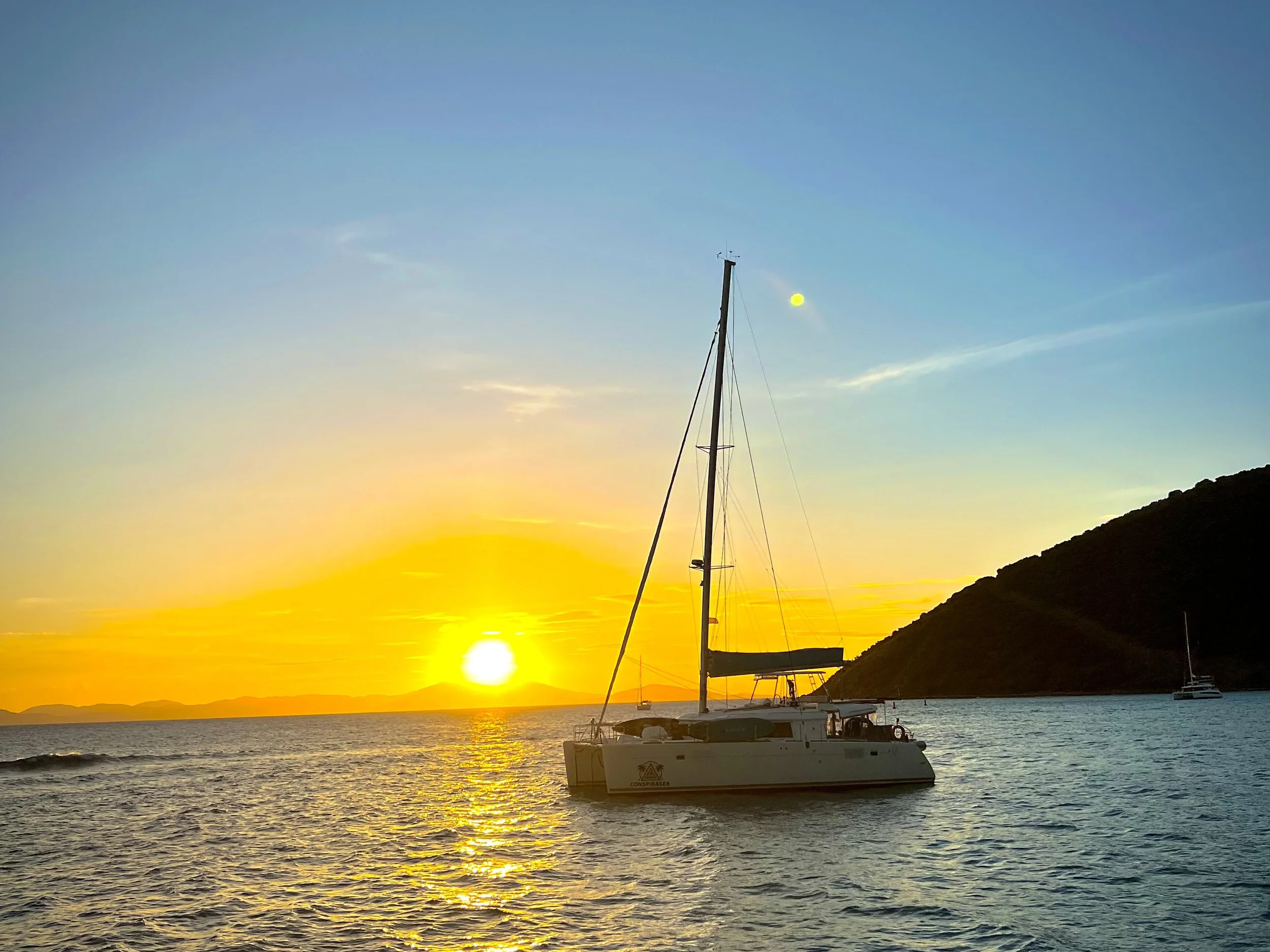
Bareboat Charter in the British Virgin Islands
1. They Don’t Know Which Questions to Ask
Most charter blogs mention food allergies and dietary preferences, and yes, those are important. But successful meal planning goes far beyond simply asking who is gluten-free or vegetarian.
Before you even think about groceries, your group needs to discuss what kind of vacation everyone is actually envisioning.
Are you planning:
Long sailing days or relaxed island hopping?
Mostly restaurant dinners or meals aboard?
Beach bars and cocktails every afternoon?
Active water sports requiring quick lunches and lots of snacks?
A bareboat charter is different from a resort vacation. There is no chef and no grocery store around the corner. Everyone needs realistic expectations about what cooking and eating aboard actually involves.
The earlier those conversations happen, the smoother the rest of the planning process becomes.
2. They Don’t Spend Enough Time Planning Meals and Drinks
One of the biggest mistakes groups make is treating food planning as an afterthought.
Meal planning for a sailing vacation requires more communication than people expect. Everyone needs to think honestly about:
Their eating habits
Beverage preferences
Dietary needs
Budget expectations
How much effort they are willing to put into cooking
Once the groceries are purchased and loaded aboard, suddenly deciding you prefer someone else’s snacks or beverages can quickly create frustration within the group.
Vacation food always sounds simple in theory—until you are on a boat for seven days with limited refrigeration and no easy way to restock.
A little extra planning beforehand prevents a lot of stress later.
3. They Want to Buy All the Groceries Themselves
Buying groceries for six to eight people for an entire week is a much bigger task than most first-time charterers expect.
Beverages alone are heavy and difficult to transport. Add frozen foods, canned goods, fresh produce, and snacks, and provisioning quickly becomes a major logistical operation.
Over the years, I’ve learned that pre-ordering groceries is usually far easier than trying to shop for everything after arrival.
Large grocery stores near charter bases often:
Set aside your order in advance
Have better inventory availability
Save you hours of shopping time
Deliver directly to your chartered yacht
I once walked into a grocery store hoping to hand-pick fresh fruit only to discover they had completely sold out of bananas. Green bananas can ripen aboard, and overripe bananas can be frozen for smoothies later in the week, but no bananas at all was a bummer!
Island provisioning is not predictable to begin with, so trying to control every grocery detail usually creates more stress than it saves. On a charter vacation, flexibility matters.
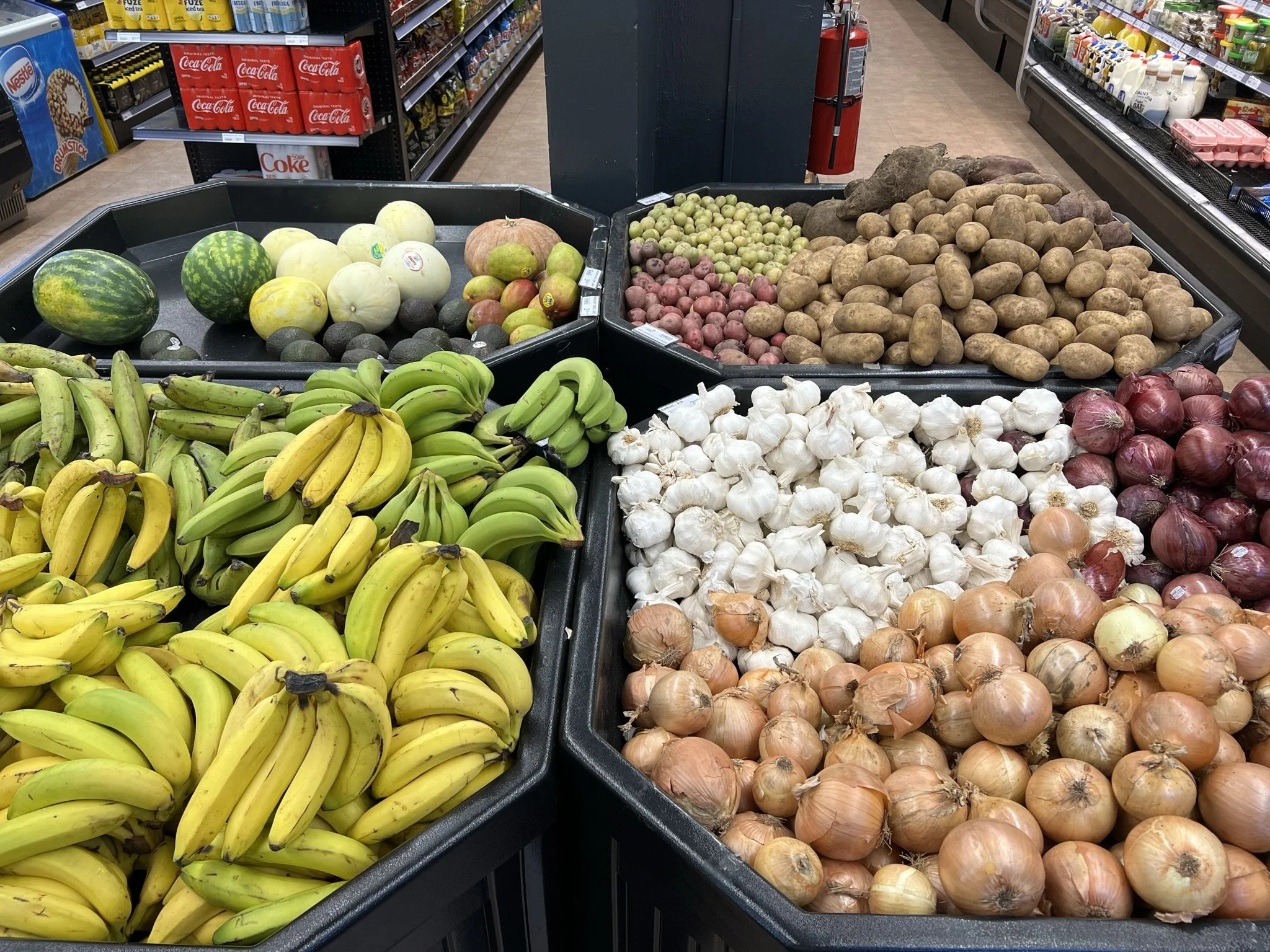
Grocery Store in a Marina
4. They Buy Too Much Food
Overprovisioning is incredibly common.
One charter group once gave us over 30 bottles of herbs and spices plus multiple cases of soda at the end of their trip. While fellow boaters are usually generous and happy to share leftover items, even we couldn’t use most of it before passing it along again.
Food is expensive on the islands, and it feels wasteful to throw away perfectly good groceries at the end of a vacation.
Many first-time charterers panic-buy because they are afraid of running out of food. In reality, most groups need far less than they think - especially if they plan to eat some meals ashore.
Simple meal plans and realistic quantities usually work best. Taking time to really survey the group and do the math for quantities before ordering the groceries will save hundreds of dollars for a one-week charter.
5. They Don’t Buy Enough
Ironically, the opposite problem can be just as frustrating.
Yes, you will probably restock a few items during a seven-day trip. But if you are constantly missing important ingredients because your grocery list wasn’t detailed enough, you’ll spend valuable vacation time:
Finding mooring balls
Taking the dinghy ashore
Walking to grocery stores
Shopping
Carrying groceries back
Reorganizing the boat again
That process takes far longer than most people expect.
And many island grocery stores are small and may not carry the specific items you are looking for.
Time spent repeatedly shopping is time not spent snorkeling, sailing, swimming, or relaxing, unless you count swimming around your boat to retrieve groceries that were dropped during transfer from the dinghy.
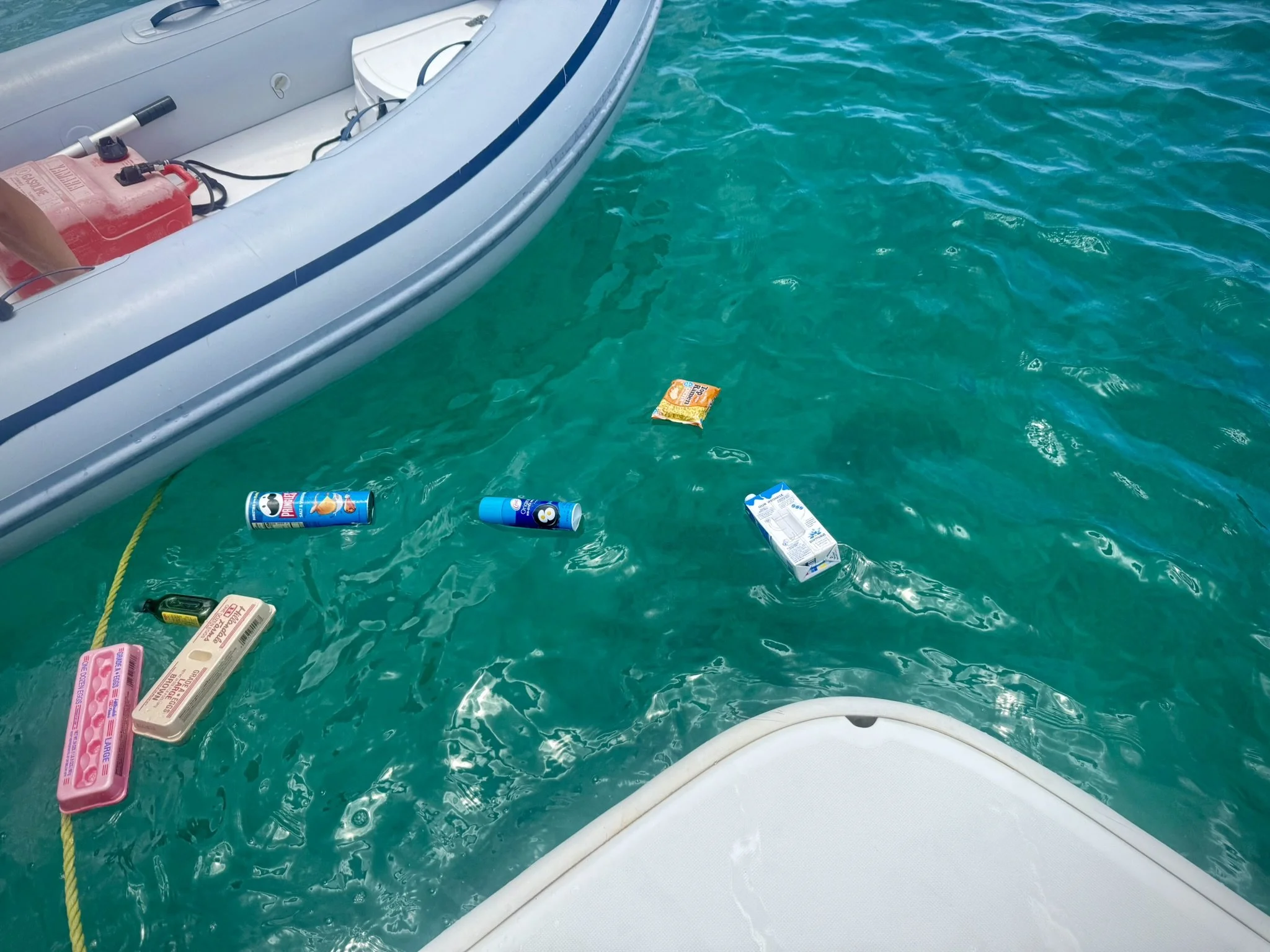
Transferring groceries can be tricky
6. They Don’t Think About Refrigeration Space
One group in our marina spent nearly $3,000 on provisions before realizing they had nowhere to store everything once the food arrived.
The charter company ended up bringing them several additional coolers, which then required large amounts of ice every day. Besides the added expense, the extra coolers took up valuable floor space and made the yacht feel cramped all week.
Refrigerator and freezer space aboard is always smaller than people imagine.
That’s why boat-friendly meal planning matters so much:
Shelf-stable foods become important
Compact ingredients work best
Frozen and refrigerated foods need to be selected carefully
Simple meals reduce storage stress
Thinking about storage before shopping can save both money and frustration.
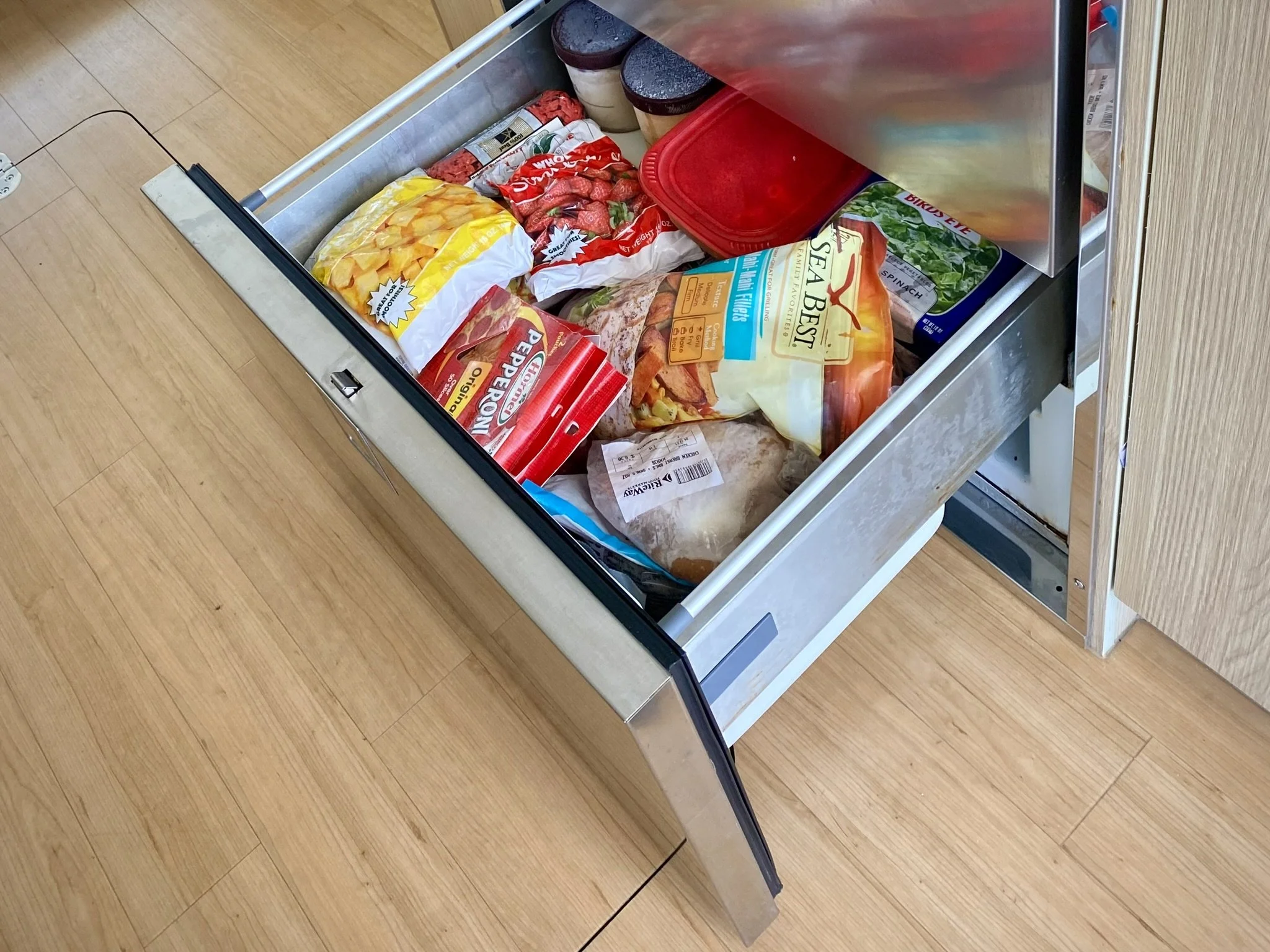
Freezer on a boat
7. They Don’t Realize Cooking on a Sailboat Is Different
Cooking aboard is very different from cooking at home.
You may technically have two burners on the stove but only enough room to comfortably use one large pot at a time. If your yacht has a charcoal grill, you need to factor in time for the coals to heat up. And most grill surfaces are surprisingly small, meaning meals often need to be cooked in multiple rounds.
Even simple recipes take longer aboard than people expect.
After cooking bacon one morning for six people and cleaning grease from nearly the entire galley, we never made bacon aboard again.
Simple, flexible meals almost always work best at sea.
8. They Don’t Use Boat-Friendly Recipes
Not every recipe works well on a charter yacht.
The best boat-friendly recipes:
Use simple ingredients
Require minimal cleanup
Work with limited cookware
Use shelf-stable foods whenever possible
Can be prepared quickly
Don’t require advanced cooking skills
Many first-time charterers try to cook exactly the same way they do at home, which often creates unnecessary stress.
Some specialty ingredients may not even be available in charter destinations. That’s why I designed the recipes in the Set Sail cookbook specifically around ingredients consistently available in popular sailing destinations.
Cooking aboard should feel relaxed - not complicated.
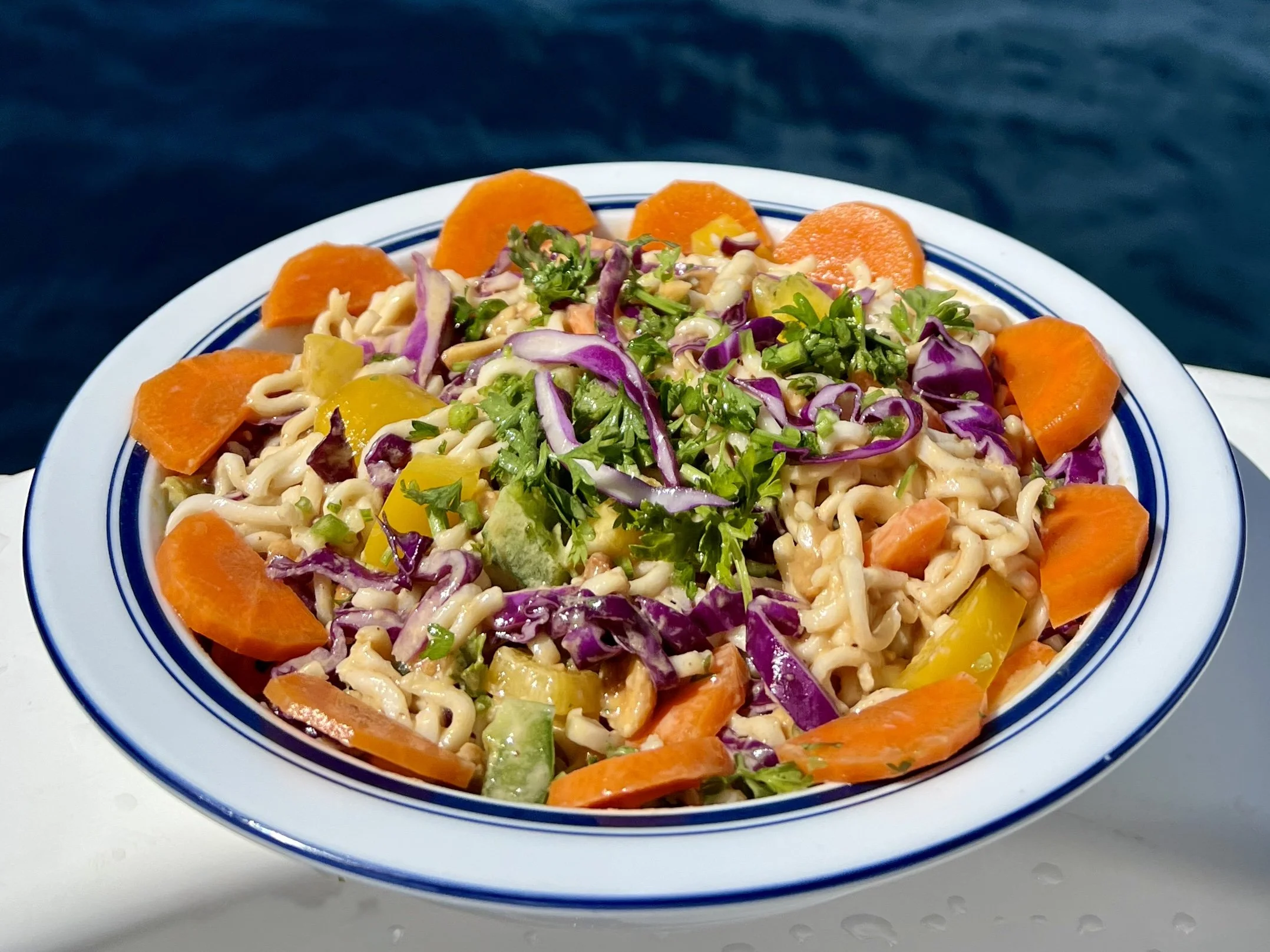
Ramen Noodle Salad
9. They Don’t Complete the Inventory Check Before Leaving the Marina
During our second charter, we saw that a can opener was listed on the inventory sheet, but we never physically checked to make sure it was actually aboard.
The next day, when we needed it, we discovered it was missing.
Unfortunately, our group had planned to prepare most meals aboard, which meant we had a lot of canned foods.
Instead of snorkeling and relaxing, we spent 3 afternoons searching for a replacement.
That experience taught us an important lesson:
Never assume everything on the inventory sheet is actually on the boat.
Before leaving the marina, double-check:
Can opener
Coffee maker and filters
Grill tools
Cutting boards
Trash bags
Dish soap and sponges
Food storage containers
Small missing items become much bigger inconveniences once you’re anchored somewhere remote.
10. They Don’t Properly Stow Their Groceries
Putting groceries away aboard a moving yacht is very different from unloading groceries at home.
Glass bottles need to be secured carefully. Refrigerator doors need to be fully closed every time. Heavy items need to be stored safely so they don’t shift while underway.
One overlooked detail can quickly become a mess.
We also learned to regularly check the refrigerator temperature dial after accidentally bumping it with groceries more than once. Food storage aboard requires much more awareness than people expect.
The better organized your galley is from the beginning, the smoother the rest of the trip will feel.
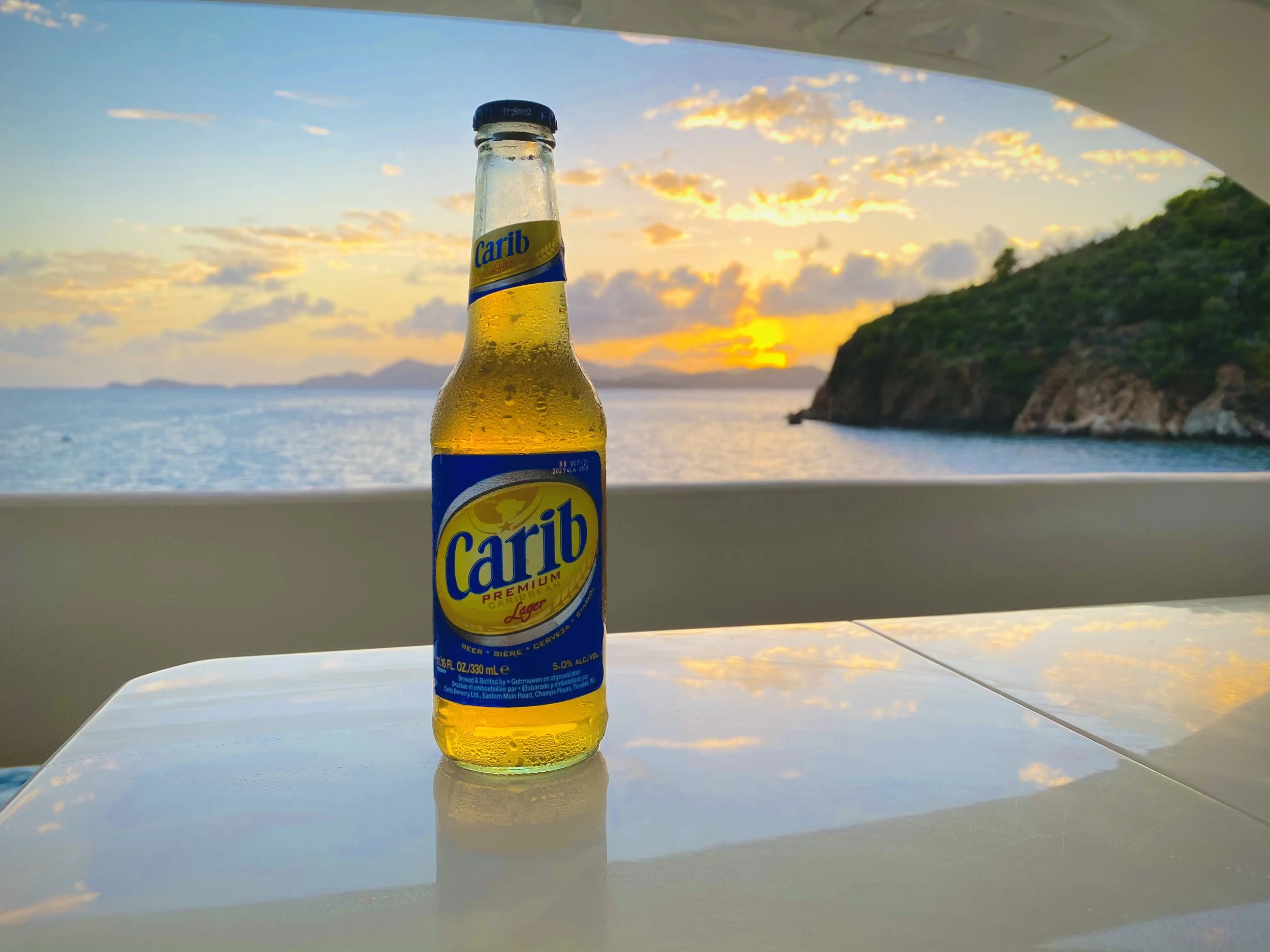
Essential Provisions for a Bareboat Vacation
Final Thoughts
Provisioning for a bareboat charter may not sound glamorous, but it has a huge impact on your overall vacation experience.
With a little preparation, realistic expectations, and a flexible meal plan, cooking aboard can become one of the most memorable parts of your trip—not one of the most stressful.
Thoughtful planning before your vacation can make all the difference once you’re anchored in paradise.
For a complete guide to planning meals aboard, provisioning efficiently, organizing your galley, and preparing simple, delicious recipes at sea, explore Set Sail: Your Guide to Meal Planning, Provisioning and Boat-Friendly Recipes for Charter Yacht Vacations.
Available at SetSailCookbook.com
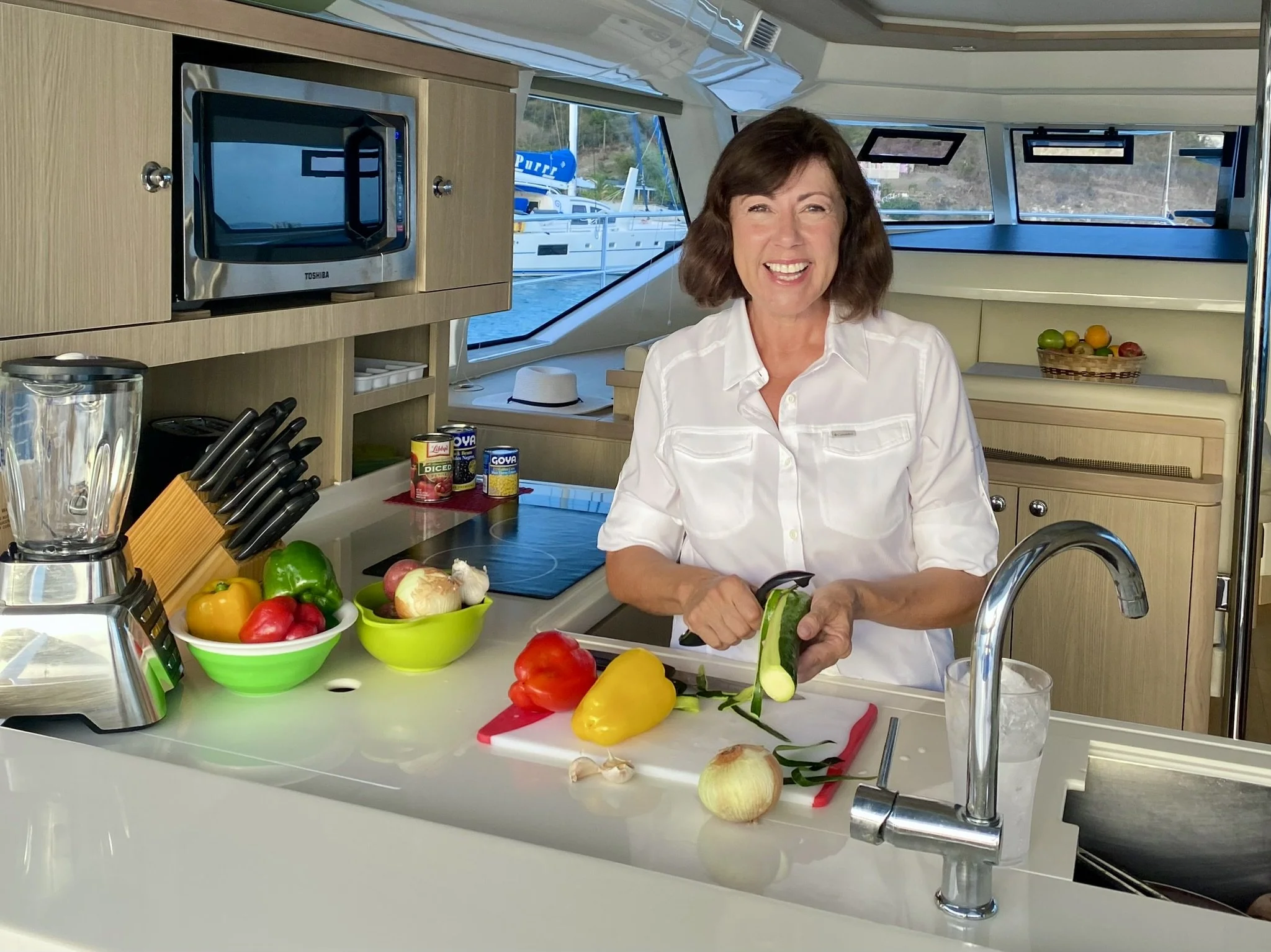
Nevena Mrdalj is the author of Set Sail.
After more than a decade of bareboat chartering and over 50 weeks spent vacationing aboard charter yachts, she shares practical provisioning strategies and boat-friendly meal ideas that help fellow charterers enjoy stress-free sailing vacations.